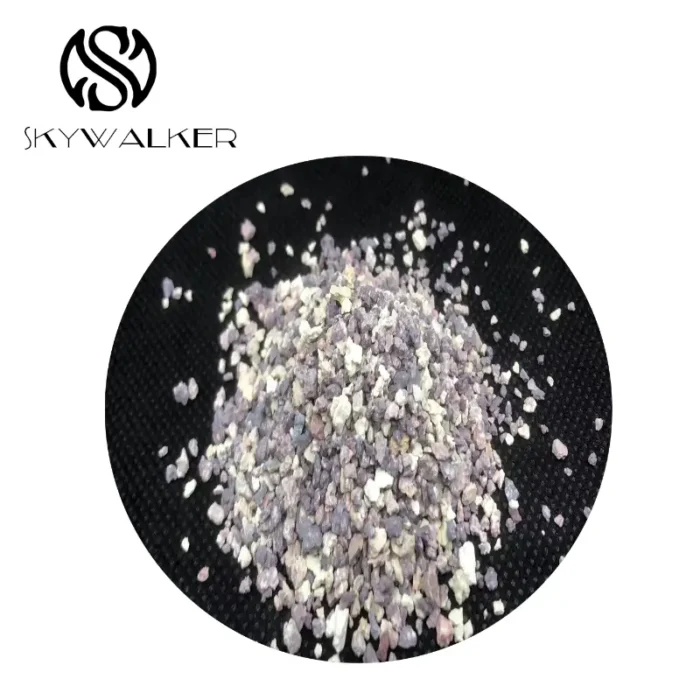
Fathoming processed bleaching material requires a detailed review of its qualities. This uncommon substance is generally utilized in the cleaning of hydrocarbons, successfully discarding impurities. The conversion strategy typically involves chemical treatment, augmenting its capturing strength to retain colored molecules. At last, this resource will analyze the theories behind refined bleaching soil and its applications.
Purifying Aggregate Companies: Locating the Appropriate Company
Establishing a established vendor of purifying material is important for many industries, particularly those involved in hydrocarbon cleaning. Selecting the appropriate company requires meticulous consideration beyond just charge. Consider their performance in bleaching earth supply, their standards procedures, and their potential to consistently accommodate your demand needs. A solid bleaching earth partner will also offer help and a spectrum of categories to match your individual application.
Certain Foundation Behind Improved Detoxifying Soil
Modified bleaching aggregate, a cornerstone throughout the refining practice for edible oils, functions through a fascinating assembly of concrete and chemical engagements. Initially, naturally occurring illite is activated – a approach involving heat and reagents – to drastically increase its surface expanse. This expanded surface offers an immense number of areas for the targeted adsorption of color pigments, contaminants, and undesirable odor compounds. The mechanism is primarily physisorption, where molecules are held by weak van der Waals associations, though some interactional adsorption can also develop with certain elements. This results by a significant decrease of color and improvement of the oil's display and essence.
Clarifying Substance - Characteristics and Applications
Lightening compound, frequently named china clay, reveals unique traits that enable it highly desirable across several selection of industries. Its foremost attribute is its extraordinary whiteness, coming from its limited oxide volume. This feature makes it fit for purposes demanding a clear aesthetic. Supplementary to its tint, whitening aggregate is generally supple and contains excellent pliancy, permitting it to be conveniently molded. Usual functions entail printing assembly, plastic enhancement, therapeutic solutions, skincare wares, and as an desiccant factor in diverse mechanical techniques. In addition, it finds function in clayware and dye industries.
Determining the Fitting Refined Lightening Earth for Individual Aims
Picking the fitting activated bleaching earth can be a difficult endeavor, as various applications entail individual properties. Consider the category of compound you’re processing; some materials are favored for organic oils, while different kinds are oriented towards livestock fats. Factors like texture and clarification activated bleaching earth strength notably influence efficiency.
- Appraise the pigmentation and essence force of the raw material to set the desired lightening proportion.
- Evaluate the particle size distribution; smaller particles generally deliver enhanced surface area, but may induce cleaning challenges.
- Fathom the fluid concentration as it impacts the material’s purifying capability.
Detoxifying Soil: Formation Approaches and Inspection
The development of bleaching earth, a widely utilized component for oil refining and chemical purification, involves several key measures. Initially, kaolinite is harvested and then subjected to treatment via heat process and/or chemical adjustment. This operation enhances the filtering properties of the earth. Subsequently, rigorous status tests are implemented, consisting of quantifications of fragment size spread, oil adsorption performance, and liquid quantity. Modern analytical techniques, such as spectroscopy analysis and formal assessment, are utilized to verify a uniform good that satisfies stringent benchmarks.
Eco-conscious Sourcing of Refined Bleaching Earth
The climbing demand for activated bleaching earth presents a major challenge regarding its production and environmental result. Standard sourcing methods can result in habitat ruin and reduction of natural resources. Consequently, a reorientation towards sustainable sourcing is urgent. This involves focusing on practices like land rehabilitation of mined areas, reusing waste materials from other industries for generation, and working alongside provincial communities to secure ethical and honest mining procedures. Furthermore, certification schemes and comprehensive auditing processes are crucial to confirm that the aggregate is obtained in a truly renewable manner. Considerations should also include decreasing energy consumption during production and diluent usage.
- Afforestation efforts
- Capitalizing on waste materials
- Working alongside local communities
- Confirmation schemes
Whitening Compound Source Catalog: Principal Companies Positioned
Selecting a reliable material provider can be a barrier, but our comprehensive list aims to facilitate the process. We’ve assiduously gathered data and classified leading enterprises in the bleaching earth trade. This resource highlights important producers known for their merit and service, allowing customers to seek out the prime source for their tailored needs. Multiple factors, including capacity, variety, and customer reviews, were evaluated in determining these prime classifications.
Interpreting Activated Bleaching Earth Performance Metrics
To aptly appraise the performance of activated bleaching earth, it’s crucial to grasp key technical metrics. These parameters often include color rating, typically measured using a gauge, which reveals the earth’s ability to withdraw color from oils. As well, acid index is vital, as it influences the bleaching process; a higher amount usually relates with improved lightening capabilities. Finally, surface area, often assessed via BET analysis, significantly impacts the earth’s capacity to bind colorants, ultimately affecting its overall clarifying strength.